Shared Branches

Friday, December 4, 2009

Beyond mammography -- MRIs, thermography, ultrasound ...

Beyond mammography -- MRIs, thermography, ultrasound ...: "

Bra Forget mammograms; breast MRIs are the way to go. No, no, thermography is the answer. Wait, what about ductal lavage? Such has been the gist of comments in the wake of the U.S. Preventive Service Task Force's suggestion that maybe, just perhaps, all women under 50 don't need regular screening mammograms.


And researchers released a report this week at the Radiological Society of North America meeting suggesting that ultrasound, in combination with a specific software program, could detect 98% of cancers. (the Reuters story)


So here's a quick rundown, from the American Cancer Society, on other breast-screening technologies.


The information includes details on just how mammograms are done, what doctors look for on the resulting film and the description of mammogram findings -- useful background as this discussion evolves.


Here's another look at screening procedures, courtesy Breastcancer.org.


As for the increasingly touted other technologies, they're generally regarded as most useful in specific cases -- not as a one-screening-technique-fits-all answer.


The original story in the now ongoing coverage: Mammogram guidelines spark heated debate.


And an addendum this week from some of the doctors who made the recent "maybe not everyone needs a regular screening" suggestion: Mammogram panel says guidelines 'poorly worded.'


-- Tami Dennis


Photo: Runners hoist a giant bra at September's Susan G. Komen Orange County Race For The Cure in Newport Beach. Credit: Allen J. Schaben / Los Angeles Times

"

A Murdoch Lays Out Logic for Cutting Carbon

A Murdoch Lays Out Logic for Cutting Carbon: "A conservative young media mogul tells 'conservation-minded' conservatives why carbon cuts make sense."

Obama's Guantanamo betrayal.

Obama's Guantanamo betrayal.: "The firestorm of criticism over the trial of Khalid Sheikh Mohammed, the alleged mastermind of the 9/11 attacks, should not obscure a darker truth: Trial is only one prong of Obama's Guantanamo strategy. Some of the Guantanamo prisoners, including those who have been detained for seven or eight years, will remain imprisoned indefinitely with no prospects of ever seeing the inside of a courtroom. Obama's much-lauded intention to close Guantanamo will not change the fate of these prisoners, who will be transferred to other prisons in the United States or abroad, and as a result, the president will perpetuate one of the most troubling policies of the Bush administration. If Obama does not repudiate this policy, it will define what the government can do in the future.

[more ...]

Add to Facebook
Add to Twitter
Add to digg
Add to Reddit
Add to StumbleUpon
Email this Article


United States - Khalid Sheikh Mohammed - George W Bush - September 11 attacks - Prison"

Why are the Promise Keepers reaching out to women and Messianic Jews?

Why are the Promise Keepers reaching out to women and Messianic Jews?: "In the 1990s, the evangelical men's ministry the Promise Keepers packed 50,000-seat football stadiums and even stuffed the Mall in Washington, D.C., with close to 600,000 sweaty, Jesus-loving males. Marshaled by Bill McCartney, a former University of Colorado football coach, the group took the evangelical world by storm. But P.K.'s star fell as rapidly as it rose, particularly after McCartney departed the organization in 2003 to establish a group that brings Christians and Messianic Jews together. Now McCartney is back, and he's trying very hard to resurrect the Promise Keepers.

[more ...]

Add to Facebook
Add to Twitter
Add to digg
Add to Reddit
Add to StumbleUpon
Email this Article


Messianic Judaism - Christian - Promise Keepers - Bill McCartney - Jesus"

Thursday, December 3, 2009

Breastfeeding May Help Moms Stave Off Diabetes, Heart Trouble

Breastfeeding May Help Moms Stave Off Diabetes, Heart Trouble: "

By Patti Neighmond


Doctors say breastfeeding is good for babies because it strengthens their immune systems and helps them fight off germs. Now researchers say breastfeeding can also reduce the risk of diabetes and heart disease in moms, years later.


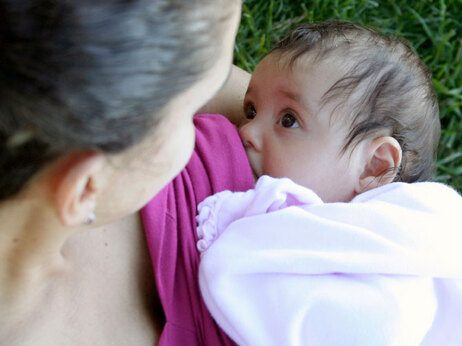
Mother breastfeeds a child.

Breastfeeding may help mom stay healthier, too. (iStockphoto.com)


It's not clear exactly why that is, but work by Kaiser Permanente's Division of Research in Oakland, California suggests a protective effect of breastfeeding on moms. The findings were just published online by the medical journal Diabetes.


Women who breastfed for one to five months reduced their future risk for metabolic syndrome by 39 percent, compared with mothers who didn't. The researchers checked the health status of women for as long as 20 years.

Generally speaking, metabolic syndrome is a cluster of risk factors that predispose people to both diabetes and heart disease, such as excessive belly fat, high cholesterol, elevated triglycerides and high blood pressure.


Women who breastfed longer did even better. The risk of metabolic syndrome was lowered by 56 percent in women who breastfed for more than nine months. Among women who developed diabetes during pregnancy, the benefit reduced their future risk of the metabolic syndrome even more, by 44 to 86 percent, depending on how many months they breastfed.


Earlier studies have shown some protective associations between breastfeeding and metabolic syndrome but this is the first to tally up the so many specifics about metabolic syndrome both before pregnancy and years later.


Epidemiologist Erica Gunderson, the study's lead author, says she can't pinpoint why breastfeeding seems to be protective but she has some ideas.


'We know women who are lactating have better sugar control and metabolize fuels better without as much stress on their system,' she says. It could also be that breastfeeding reduces abdominal fat, she says.


In the study, over 90 percent of the women who were later diagnosed with metabolic syndrome had excess abdominal fat.


Gunderson says that lactation may have a role in actually decreasing belly fat, because the process of lactation relies more on hip and thigh fat to produce milk, than it does on abdominal fat.


» E-Mail This » Add to Del.icio.us

"

Note to new smokers: Menthol cigarettes only seem more benign

Note to new smokers: Menthol cigarettes only seem more benign: "

Butts New smokers like menthol. A new study from the Substance Abuse and Mental Health Service Administration offers some data on just how much they like it.


Not only is use of menthol cigarettes more common among novice smokers than among well-practiced smokers (44.6% compared with 31.8%), use of the cigarettes has risen from 31% in 2004 to 33.9% in 2008.


Menthol is a mint-like additive that feels soothing. One can see the appeal to those -- adolescents, perhaps -- not used to deliberately dragging smoke into their lungs. But cigarette smoke is still cigarette smoke.


Here's the full report. And here's an earlier story on the Food and Drug Administration's recent ban of cigarettes with fruit, candy or clove -- but not menthol -- flavors.


-- Tami Dennis


Photo credit: Daniel Acker / Bloomberg

"

No increase in brain cancer as cellphone use rose

No increase in brain cancer as cellphone use rose: "

Cellphone Research on whether heavy cellphone use increases the risk of brain cancer has yielded mixed results. The latest analysis of the issue, published today, found no such link.


The study, published in the Journal of the National Cancer Institute, identified 60,000 people from Denmark, Finland, Norway and Sweden who were diagnosed with glioma or meningioma brain cancer between 1974 and 2003. This was an era in which cellphone use increased dramatically, but the study showed that brain cancer rates over this period were stable, decreased or continued a gradual increase that started before the introduction of cellphones. The study did not examine individual patterns of cellphone use.


While the issue will continue to be controversial, the study is important because it mirrors the international Interphone case-control studies which have shown no overall increase in glioma or meningioma rates. The Interphone studies, however, "leave open the possibility of a small to moderate increased risk for glioma among the heaviest users of mobile phones," wrote the authors of today's paper from the Institute of Cancer Epidemiology, Danish Cancer Society. Swedish studies, they noted, have found increased risks for glioma in cellphone users.


It's possible that cellphone use must exceed five to 10 years before the growth of an associated brain tumor is observed, they said. Or it could be the risk is too small to be observed, is nonexistent or that the risk is linked to only a subgroup of brain cancers.


But, the authors wrote: "Because of the high prevalence of mobile phone exposure in this population and worldwide, longer follow-up time trends in brain tumor incidence rates are warranted."


- Shari Roan


Photo credit: Kejr Sasahara / Associated Press

"

Pew poll: Americans turning sharply toward isolationism - Yahoo! News

Pew poll: Americans turning sharply toward isolationism - Yahoo! News

Posted using ShareThis

Leisurely morning meals -- latimes.com

Leisurely morning meals -- latimes.com

Posted using ShareThis

Wednesday, December 2, 2009

Bullet train officials urged to weigh 2 options at Union Station

Bullet train officials urged to weigh 2 options at Union Station: "The L.A. City Council says the alternatives are crucial to protecting East Los Angeles residents as planners determine the downtown stop on the planned 800-mile route.


The Los Angeles City Council on Wednesday unanimously urged the California High Speed Rail Authority to consider two proposed alternatives for the bullet train stop at Union Station downtown.


"

New human embryonic stem cell lines eligible for federal research dollars for the first time since 2001

New human embryonic stem cell lines eligible for federal research dollars for the first time since 2001: "

The number of human embryonic stem cell lines eligible to be used in government-funded research just went up by 13.


Collins The National Institutes of Health announced today that 11 new cell lines from Dr. George Daley at Children’s Hospital Boston and two lines from Ali Brivanlou at Rockefeller University in New York became the first additions to the NIH Human Embryonic Stem Cell Registry since President Obama reversed his predecessor’s policy. Under President Bush, only human embryonic stem cells prior to August 2001 were eligible for federal funding.


The new lines were derived from embryos created for fertility treatments and donated by couples who went through a rigorous informed consent process.


And more may be on the way. The NIH said that 96 more lines have been submitted by researchers, including 20 that will be vetted by an advisory committee on Friday.


The additions come nearly nine months after Obama signed an executive order that directed the NIH to make federal research funds available to newer lines of human embryonic stem cells. Scientists were overjoyed and said the decision would accelerate the pace of research into such ailments as diabetes, Alzheimer's and spinal cord injuries. Details of the policy are available here.


-- Karen Kaplan


Photo: NIH Director Francis Collins said today that he was "happy to say that we now have human embryonic stem cell lines eligible for use by our research community under our new stem cell policy." Credit: Aude Guerrucci-Pool / Getty Images

"

Term 'embryo adoption' is misleading, medical group says

Term 'embryo adoption' is misleading, medical group says: "

Embryo In recent years, some private adoption agencies have promoted "embryo adoption" services in which people can take possession of donated embryos and use them in concert with fertility treatments to become pregnant. But a major medical group today blasted the term "embryo adoption," calling it inaccurate and misleading.


The position paper from the ethics committee of the American Society for Reproductive Medicine says that the traditional model of adoption involves a legal process to establish parentage of infants or older children and should not be confused with the transactions involving donated embryos. The group said the preferred term is "embryo donation," because it is a medical intervention that only become possible through medical technology.


Some adoption agencies that deal with embryos require prospective parents to divulge information on their religious beliefs or sexual orientation. Use of the adoption model places an "inappropriate burden" on patients seeking an embryo donation, the statement said.


"Embryo donation is an important therapeutic option for infertile patients," said Dr. Robert Brzyski, chairman of the ASRM Ethics Committee. "Home visits, judicial review and other adoption procedures are not necessary and not appropriate for a patient whose case entails what is most accurately characterized medically as a tissue donation."


Embryo donation, however, is regulated similarly to any medical procedure that uses donated tissues or organs.


The statement is published in the December issue of the journal Fertility & Sterility.


-- Shari Roan


Photo: A petri dish containing embryos suspended in a growth media. Credit: Mark Boster / Los Angeles Times

"

NPDES permits on impaired waterways

NPDES permits on impaired waterways: "


Pinto Creek (photo from Save Pinto Creek blog)


Cross-posted at CPRBlog.


Precisely what the Clean Water Act requires of point sources that discharge to already-polluted waterways has long been a point of confusion. Now, according to Inside EPA (subscription required) EPA may revise the rules it applies to new permits on impaired waterways. A rulemaking seems far from certain at this point — the story quotes an EPA spokesperson as saying the agency is “considering the possibility” — but if EPA does launch one it should make sure that any regulatory revisions serve the Clean Water Act’s goal of restoring and maintaining the chemical, physical, and biological integrity of the nation’s waters.


It may seem odd that new permits are ever allowed on impaired waters. The Clean Water Act requires that states set water quality standards for the waters within their borders. All NPDES permits (the permits issued for point source discharges by EPA or state authorities) must include both technology-based requirements and any additional limitations needed to ensure that those water quality standards are met. No permit may be issued if “the imposition of conditions cannot ensure compliance with the applicable water quality requirements.” 40 C.F.R. 122.4(d). And no permit may be issued to any new source which “will cause or contribute to the violation of water quality standards.” 40 C.F.R. 122.4(i). Impaired waterways by definition do not meet water quality standards and will not even after technology-based standards are fully applied to the relevant point sources. At first blush it seems that any new source discharging a pollutant that already impairs a receiving water would necessarily “cause or contribute” to violation of water quality standards.


EPA has never endorsed quite such a strong reading of the Clean Water Act, however. The 10th Circuit did, but it was slapped down by the Supreme Court, which ruled in Arkansas v. Oklahoma, 503 U.S. 91 (1992), that new permits are not absolutely banned on impaired waters. That case had highly unusual facts — EPA had found that the disputed discharge would not cause any detectable change in water quality. Most new sources can’t make that claim. Nonetheless, until recently EPA and state permitting authorities thought they could approve new permits that would make water quality worse provided the permittee arranged for an offseting reduction in the pollutant load from some other source.


Then the Ninth Circuit decided Friends of Pinto Creek v. EPA, 504 F.3d 1007 (9th Cir. 2007). EPA (which at the time was the NPDES authority for Arizona) issued a permit for copper discharge from a new mining operation into Pinto Creek, which was already impaired by copper. EPA claimed that the new discharge would be offset by partial remediation of an old mine site. The court was not convinced that the offset was real, but even assuming it was, the court ruled that it could not justify the new permit.


[T]here is nothing in the Clean Water Act or the regulation that provides an exception for an offset when the waters remain impaired and the new source is discharging pollution into that impaired water.


The Ninth Circuit read EPA’s regulations to allow only a very limited exception to the prohibtion on new permits that cause or contribute to water quality violations: where a Total Maximum Daily Load has been prepared and the applicant demonstrates both that the TMDL leaves room for the new discharge and that “existing dischargers into that segment are subject to compliance schedules designed to bring the segment into compliance with applicable water quality standards.” 40 C.F.R. 122.4(i). The permit in question did not qualify, because the TMDL did not establish that other reductions would make room for the new discharges, and because existing point sources were not on a discharge reduction schedule that would bring Pinto Creek into compliance with water quality standards. The Ninth Circuit was even willing to rope in non-point sources, which have become the bane of many waterways because they generally escape any federal regulation. If regulation of point sources is not sufficient to ensure compliance with water quality standards, the court said:


then a permit cannot be issued unless the state or [permit applicant] agrees to establish a schedule to limit pollution from a nonpoint source or sources sufficient to achieve water quality standards.


Since the Pinto Creek decision, industry has been pushing for regulatory changes to reverse what they characterize as a de facto moratorium on new permits on impaired waterways. Those efforts intensified after the Supreme Court denied the permit applicant’s petition for certiorari in January 2009. Now EPA’s making noises about taking up the issue.


Some clarification of the regulations might well be desirable. They are hardly a model of clarity with respect to a number of questions, including what it means for a new source to cause or contribute to a water quality violation, what difference it makes to the permitting decision whether a TMDL is in place, and how nonpoint sources can be drawn into the solution. But if it decides to revisit the regulations, EPA should do so with an eye to advancing the goals of the Clean Water Act, not just because industry finds the current situation inconvenient.


Water quality remains the Achilles heel of the Clean Water Act. EPA’s latest water quality report finds that nearly half of assessed rivers and streams, and almost two-thirds of assessed lakes are still impaired, nearly 40 years after adoption of the modern Clean Water Act. The Act’s failure to clean up waterways is due in large part to federal unwillingness to deal with nonpoint sources, and to failure of the TMDL program, which should provide incentives for states to deal with that problem, to live up to its potential.


The best way to deal with the water quality problem would be a stronger TMDL program, one that requires TMDL implementation. EPA produced a rule to that effect in the Clinton era, but Congress blocked its implementation even before the Bush administration withdrew it. EPA’s current NPDES regulations, as interpreted in Pinto Creek, provide an alternative lever it should not lightly surrender. Barriers to new point source permits can be a strong motivator, because sizeable construction projects typically require stormwater permits. If NPDES permits can’t be had, development can be severely limited. EPA therefore should stick with the requirement that an impaired waterway be demonstrably (and enforceably) on a path to meeting water quality standards as a condition of allowing new permits. That’s the kind of hammer needed to get states to grapple with their water quality problems.


In the larger context of an effective compliance plan, offsets can play a postive role. With the caveat that they must be verifiable and quantifiable, offsets could take advantage of opportunities to make low-cost reductions in non-point source pollution. By analogy to New Source Review in non-attainment areas under the Clean Air Act, new sources should be required to obtain offsets at a ratio greater than 1:1, perhaps even progressively increasing with the level of impairment. That would make the new sources part of the solution, rather than just a new problem.


"

Tuesday, December 1, 2009

Down Syndrome Births Rise Unexpectedly

Down Syndrome Births Rise Unexpectedly: "

By Joseph Shapiro


You might be surprised to learn there's been an increase in the number of children born with Down syndrome in recent years. The conventional wisdom holds that with more prenatal screening, the rate at which children would be born with Down syndrome would have fallen.


A mother holds her son who has Down Syndrome.

Heidi Moore holds her son, Jacob, 8, at their home in Alpharetta, Georgia in 2008. Jacob has Down Syndrome but takes music therapy class, reads at an age-appropriate level and plays piano. (Jenni Girtman/AP)


But as researchers write in the latest issue of the medical journal Pediatrics, there was an increase in Down syndrome births between 1979 and 2003. 'It went up by 31 percent--from 9 per 10,000 births to 12 per 10,000 births,' says Dr. Adolfo Correa, an epidemiologist at the federal Centers for Disease Control and Prevention and co-author of the study.


Correa says the most likely reason for the increase is that women wait longer to have children, which increases the chances of a child being born with Down syndrome. 'The prevalence of Down syndrome is five times higher among births to women who are 35 years of age and older,' says Correa.

But there may be other reasons. One, which shows up in the study, is that children with Down syndrome are leading longer, healthier lives. And that may encourage a pregnant woman, who learns she may give birth to a child with Down syndrome, not to terminate a pregnancy.


Indeed, kids with Down syndrome now go to regular schools and some, these days, even go on to college. There's support for families, too, from groups like the National Down Syndrome Society and the National Down Syndrome Congress.


The study looked at births and also at the number of children with Down syndrome, up to age 19, living in 10 population centers. In 2002, the researchers found that Down syndome 'was present in 1 of every 971 children and adolescents who were age 0 to 19 and living in 10 US regions.' The absolute number of people with Down syndrome in the US is about 83,000.


There are differences by race and ethnicity, the researchers found. Hispanic families were most likely to have a child with Down syndrome, followed by non-Hispanic white families. African-American families were the least likely to report having a child with Down syndrome.


The Pediatrics study doesn't explain the differences, but Correa speculates that poorer black families may not have the same access to health care. And without good health care, children with Down syndrome, who sometimes have heart defects or other health problems, may not live as long.


» E-Mail This » Add to Del.icio.us

"

The mind unchecked: Is a toddler's lack of self-control key to early learning?

The mind unchecked: Is a toddler's lack of self-control key to early learning?: "

Anyone who's seen a young toddler "at work" can tell that her learning style is a study in chaos. She moves from banging pots and pans to tormenting the cat to demanding food to bursting into tears when she can't open the back door and hurdle off the deck--all in the span of minutes.


But when it comes to, say, the daunting task of mastering language, that same baby is a turbo-charged learning machine. She is building her toolkit of words and phrases by the hour, forming sentences that not only get her needs met but generally comply with rules we would never think to try to teach her.


How does this distractible little creature manage to derive so much information from her surroundings when she seems to be moving too fast to make sense of anything? Why, if we adults are so good at learning and doing things, is she so much better and faster at learning something as complex as, say, a language?


Maybe, suggests an intriguing article published today in the journal Current Directions in Psychological Science, it's becauseher underdeveloped powers of paying attention, of filtering out distractions and of imposing regular patterns on her experiences. Maybe it's because she lacks the very thing that makes her dad so good at filtering out distractions and getting things done--a fully formed prefrontal cortex.


Babies are born with the foremost part of the brain--the prefrontal cortex--almost completely undeveloped. For children developing normally, it takes about four years for that so-called "seat of higher reasoning" to catch up with the rest of the brain in size and complexity. (For children with attention-deficit hyperactivity disorder, the maturation of the prefrontal cortex takes longer; for those with autism, the prefrontal cortex develops early.) This would explain why toddlers (and some with ADHD) are inattentive, distractible, do not remember what you told them 15 seconds ago, and "live in the moment": when developed, the prefrontal cortex plays a key role in suppressing impulses, focusing on the task at hand and setting priorities among competing demands.


Yet, by the time a typical baby is 4, she will have learned to speak (in fact, she may never be quiet), and will have learned all kinds of complex behaviors--that small creatures with fur are fun to torment, that climbing up a slide's ladder will yield a fun ride down, that stealing a friend's toy will bring momentary triumph but will also cause her friend to cry and a teacher to intervene.


In those crucial four years, a toddler's accumulation of knowledge about her world may be unhampered by the discipline imposed by the prefrontal cortex, suggests a trio of neuroscientists from the University of Pennsylvania and Stanford University. She vacuums up experience raw, the way she'd ingest anything she found on the carpet. Her prefrontal cortex doesn't stand in the way and try to keep her "on task." It won't make her reject the use of a pan as, say, a hat because hats cannot be made of shiny metal.


In language, her underdeveloped powers of attention will keep her from getting bogged down by pesky exceptions to rules of grammar or syntax. So, she'll always apply the most general rules she knows--say, that adding an "s" makes things plural. She'll incorrectly say, "the mouses are running away," because her underdeveloped prefrontal cortex didn't slow her down and take note that the plural of "mouse" is "mice."


The authors call this period of disorderly learning "cognition without control." They note that it happens beyond babyhood as well: deep sleep, during which the prefrontal cortex is generally quiet and the sensory cortex is working overtime, would seem to afford even adults a nightly return to cognition without control--and an opportunity to do what babies seem to do so well: to derive broad inferences from recently learned things without getting too bogged down in petty exceptions and details.


This is a theory, not a finding, note the authors, led by University of Pennsylvania's Sharon L. Thompson-Schill: that evolution may have favored a delay in the maturation of the brain's "braking system" as a means of allowing rough-but-rapid learning of complex matter such as language and social conventions. But it's a theory that might help clinicians and educators begin to identify what are the best windows for teaching very young children and for helping kids with developmental differences to learn as well.


-- Melissa Healy

"

Routine cancer screening can be too much of a good thing

Routine cancer screening can be too much of a good thing: "

Doctors and patients are still grappling with the notion that when it comes to cancer screening, more isn't always better. A reader from West Springfield, Mass., offered to share this cautionary tale of what happened to her when a routine test indicated she might be at risk for gallbladder cancer:


GallbladderIn August, I went through a completely unnecessary surgery that has left me with problems that I did not have prior to the surgery. About six years ago, a polyp was found on my gallbladder. I worried for about two months that I was going to die, until I finally got in to see a gastroenterologist. He told me, "We don't do anything about those. We would find those if we scanned people at random on the street. There has to be some limit." For a second or two, I wondered if he was making a cost-benefit analysis that might hurt me if this particular polyp turned out to be the rare one that was a problem. But for the most part, I stopped worrying about it, and did not think about that polyp again for several years.


Unfortunately, that doctor retired, and my new doctor was much more "conscientious." He told me we had to screen the polyp every six months to make sure it was not growing. That went on for a couple of years until one test said that the polyp had grown (although that made little sense because they told me it had "grown" to the same size that it was six years ago when it was first discovered). What followed were many agonizing months in which I tried to decide if I should have my gallbladder removed. I sought second opinions and read research concerning gallbladder cancer. It is extremely rare, but very deadly if not caught soon enough. I was frightened by "horror stories" from others who'd had the surgery and suffered adverse effects. I also heard from many people who said they felt much better after the surgery. The doctors, of course, minimized any negatives to the surgery. The only complication they informed me of was the possibility of having diarrhea for the rest of my life. But don't worry, they said, there's a pill for that.


In the end, I had the surgery done, and I deeply regret it. The surgeon found a cholesterol polyp that I could have lived with for the rest of my life. First of all, I was completely traumatized by the surgery. I was horrified that an organ had been removed from my body and sickened by the thought that someone had opened up my body and taken something out. This was an unexpected, emotional reaction that overwhelmed me for several days following the surgery and left me crying almost constantly. Of course, to the doctors, surgery is routine, but I had never had surgery before.


Now, three months later I am suffering from some problems I did not have before the surgery. A number of people, including the surgeon, have told me that I should simply be grateful that I did not have cancer. They tell me that surgery was the right decision because it is better to have the gall bladder removed than to take a chance of having a malignant tumor. I cannot agree with this logic. A certain percentage of the population -- millions of people -- have polyps on their gallbladder. Six thousand people die from gallbladder cancer each year. We simply cannot remove millions of gallbladders to prevent 6000 cases of cancer. Fortunately, most of the people who have polyps do not know about them, because their abdomens have never been scanned. Unfortunately, mine was, setting off a chain reaction of events that eventually led to a completely unnecessary surgery.


Why was my abdomen scanned six years ago? My primary care doctor was performing a routine physical, pressing down all over my belly and abdomen asking me if I felt any tenderness. I did not know how to answer. My abdomen is lean (and extremely ticklish). I was not sure how to distinguish between “tenderness” and the normal pressure anyone would feel during such an exam. During one of her many presses, I answered yes, that I felt some tenderness. She immediately ordered a test. I thought about canceling, as I was in no real pain, but I didn’t. I went ahead with the scan, and that is how the polyp was first discovered.


-- Karen Kaplan


Photo: Doctors performing laproscopic gallbladder surgery. Credit: Allen J. Schaben/Los Angeles Times

"

Even small victories against corporate America are enormous

Even small victories against corporate America are enormous: "Based on a conservation I had last night with a Senate Democratic leadership aide, there is no way that health care reform will be signed by President Obama in 2009.

The expectation is that Republicans--and reluctant Conservadems--will drag out the debate and amendment period for a minimum of two weeks. With the House of Representatives going on recess on December 18th, this means that the conference committee will not happen until Congress reconvenes in January. So, expect at least another month of this epic legislative fight.

It is not a big secret why this fight has lasted so long. Among all of the remaining legislation being seriously considered by the Obama administration and the Democratic Congress, health care reform is the only one with a chance to expand the relative size of the social safety net, and (through the public option) increase public ownership over the commanding heights, over the long-term. Nothing else remaining on the legislative horizon does that, not even the jobs bill.

In an America that has become increasingly dominated by moneyed interests over the past three decades, victories like this do not come very often. Outside of temporary measures like the stimulus, social investment spending in the United States has stagnated as a percentage of GDP for going on 35 years. 35 frreakin' years! Progressives just don't win fights like these anymore.

Sure, the proposals on the table have lots of flaws. All of them are inadequate to solve to scope of the health care problems that we face. However, one useful way of looking at this fight is not over redirecting 0.3% or 0.5% of our GDP toward the social safety net, or over transferring a meager 5% of the health insurance market to a watered down public option. Instead, this is about whether or not progressives can win any fight to expand the social safety net over the long-term by any amount anymore.

If we can't win this fight, then what hope is there for ever expanding the relative size social safety net? Virtually none, as we will continue to only have models for defeat. However, if the bill passes, and the social safety net is modestly expanded, it at least demonstrates that such victories are possible.

If we can do it once, then we can do it again. That makes any win, no matter its size, an enormous victory.

"

Why Loneliness Can Be Contagious

Why Loneliness Can Be Contagious: "When one person in a group begins to feel lonely, the negative emotion can spread to others, increasing everybody's risk for feelings of loneliness, a new study shows."

Expect a few, small, but (mostly) worthy changes under the Obama administration

Expect a few, small, but (mostly) worthy changes under the Obama administration: "Nathan Newman has a worthy post up detailing the many positive achievements of the Obama administration and Democratic Congress to date. Before President Obama's speech on Afghanistan, and in light of my article yesterdayon progressive indifference to Democratic electoral troubles for 2010, it is certainly worth a read.

My rebuttal to Nathan is that the major accomplishments are temporary, and offer little change to the status-quo over the long-term. It is true that some large, temporary changes were brought about by the stimulus, jobs bill and bailouts. However, after 2011, the Obama administration and Democratic Congress (if the latter still exists) will not significantly alter the relative size of the social safety net, or the long-standing private / private balance of control of the commanding heights. The Democratic trifecta will bring about some change, most of it good, but nowhere near the fundamental shifts many hoped for during the heady, heightened rhetoric of 2008.

To demonstrate this point, first consider the big-picture view of where the United States compared to the other G7 nations in terms of public-sector social spending according to the most recent data:

Gross public social spending, as percentage of GDP, at market prices, 2005


CountrySocial Welfare*EducationTotal
France29.2%5.6%34.8%
Germany26.7%4.2%30.9%
Italy25.0%4.3%29.3%
UK21.3%5.0%26.3%
Japan18.6%3.4%22.0%
Canada16.5%4.7%21.2%
USA15.9%4.8%20.7%
* = Does not include transportation, agricultural investment or energy production. A complete description of what it does include can be found on page 11 of this large PDF

Among large, wealthy democracies, the United States has the smallest social safety net. This is intimately connected to our far greater rates of income inequality (the US has a GINI coefficient of 45, compared to a mean of 32.2 for the other six nations), which itself connects to higher rates of health and education inequality. Closing that gap between the United States and the rest of the G7 would be a major shift, but it isn't going to happen.

There has been little change in the size of the social safety net in the USA in recent decades. Here is the change in public sector social welfare spending, as a percentage of GDP, by Presidential administration from 1981-2005 (the most recent year for which OECD data is available):

Reagan I: -0.3%

Reagan II: -0.1%

Bush Sr.: +2.3%

Clinton I: -0.4%

Clinton II: +0.2%

Bush Jr. I: +0.8%

Somewhat surprisingly, the only gains took place under the various Bush administrations. Both Reagan and Clinton oversaw periods of stagnation in the size of the social safety net.

Rather than a dramatic change, the Obama administration will actually be much more like the Reagan / Clinton stagnation than the Bush expansions of the social safety net (holy crap it feels weird to write that last bit). In the extended entry, I explain why.
The Democratic trifecta is not going to produce major changes in the size of the social safety net in the United States:

  1. Stimulus, bailout and jobs bill will run their course. By the end of fiscal year 2011, the stimulus, jobs bill and bailout will have all run their course. None of these bills will structurally alter public social expenditures as a percentage of GDP in 2012 and beyond.

  2. Declining unemployment. Much of the Bush-era expansions of the social safety net were actually expansions in people filing for unemployment benefits. By the end of fiscal year 2011, at the latest, the unemployment figure will have noticeably improved, thus resulting in a decline in unemployment compensation spending. For example, from fiscal year 2009 to fiscal year 2013, the pro-teagbagger site, usgovernmentspending.com, projects that decline to be equal to 0.75% of GDP.

  3. Health care expansion. One long-term structural change in public sector social spending by the Democratic trifecta will be health care legislation. The House health care bill is projected to expand public-sector outlays for health care by $672 billion over ten years, while the Senate health care bill is projected to increase those same outlays by $356 billion. Let's split the difference, and say the final bill increases outlays by $514 billion, or 51.4 billion per year, or about 0.3% of GDP.

  4. Spending freeze or 5% non-defense discretionary spending cut still looms. The Obama Administration is preparing two budget options for next year. One option is a freeze in non-defense discretionary spending, while the other is a 5% cut. The 5% cut would amount to about $35 billion, or 0.25% of GDP, mainly (though not entirely) in social spending. This compares to last year's non-health care, non-defense, discretionary increase of $53 billion in the budget, or 0.4% of GDP.
Add it all up, and there will be no significant change in the relative size of the social safety net under the Obama administration. Gross public social expenditures will increase by anywhere from 0.5%-0.8%, while the decline in unemployment compensation and coming spending freezes will entirely balance out those gains.

While the OECD does not have data on public sector social spending beyond 2005, usgovernmentspedning.com, whose numbers are very close to the OECD's for previous years, projects the following social spending trends for fiscal years 2005-2013:


Total social welfare + education spending, as a percentage of GDP

2005: 20.9%

2006: 20.9%

2007: 21.0% (last Republican trifecta budget)

2008: 21.7%

2009: 23.8% (last Bush budget)

2010: 24.7% (first Obama budget)

2011: 24.3% (next year's budget)

2012: 23.5%

2013: 23.4% (last budget of Obama's first term)

In short, there will likely not be any increase in the size of the social safety net under President Obama and the Democratic Congress. There will be a transfer of public money from unemployment compensation to health insurance subsidies, which is a good thing and worth fighting for. However, there might also be a Social Security commission (the Obama administration is in talks with Kent Conrad), which is worth fighting against. Such a commission would actually reduce the size of the social safety net by about 1.0% over the very long-term (the end of the 21st century) if it results in Congress passing something similar to OMB director Peter Orzag's plan.

There will also be little shift in the control of the commanding heights of the economy. Federal ownership of large percentages of the financial, housing and auto industries will be as temporary as the stimulus funding. The one major exception, if it passes into law, would be a public health insurance option. While nowhere close to single-payer, it would still be a significant shift toward public control of a major industry.

As far as new financial regulations go, well, don't forget that the previous financial deregulations of 1999 were passed into law with overwhelming Democratic support in the House, Senate, and Larry Summers. So, while I don't pretend to understand the regulatory process very well, I'm not holding my breath for strong reforms.

Overall, we will see little, long-term structural change to the economy under the Obama administration. If you worked for Obama's election-as pretty much all of us reading this article did--what did you fight for? Here is a list:

  • Sonia Sotomayor, plus many other non-Supreme Court judicial appointments in the same vein.

  • A far more prudent, though still perhaps inadequate, response to the Great Recession than John McCain's all tax cuts idea.

  • A generational improvement to the health care safety net, even if that will still be far from adequate.

  • Some improvements to worker rights.

  • A major improvement in America's international image, and a reemergence of multilateral diplomacy.

  • Some good executive branch orders, and stimulus provisions, on climate change and renewable energy. A big land conservation bill, too. All told, these developments might have turned the corner on national carbon output.
And that's about it. Its all pretty good, but it is far from a progressive governing majority that would bring the United States up to speed with the rest of the wealthy, large democracies.

We could have moved significantly closer to that goal without the 60-vote Senate, making the fight to save the filibuster in 2005 about the dumbest move progressives have made in a long time. And no, the filibuster did not save Social Security. By the time the Gang of 14 struck their deal, on May 24, 2005, Social Security privatization was already in the toilet in terms of popularity, and hadn't passed a single congressional committee. It wasn't going anywhere, with or without the filibuster.

We are a long way from big change that will catch the US up to the rest of the OECD. Not only will it require new electoral thinking and a long-term strategy, but it will also require much greater progressive control over the ideology-producing institutions of our country.

"